×
- Hello
- Login or Register
- Quick Links
- Live Chat
- Track Order
- Parts Availability
- RMA
- Help Center
- Contact Us
- Shop for
- Audi Parts

My Garage
My Account
Cart
Genuine Audi Driveshaft
Drive Shaft- Select Vehicle by Model
- Select Vehicle by VIN
Select Vehicle by Model
orMake
Model
Year
Select Vehicle by VIN
For the most accurate results, select vehicle by your VIN (Vehicle Identification Number).
103 Driveshafts found
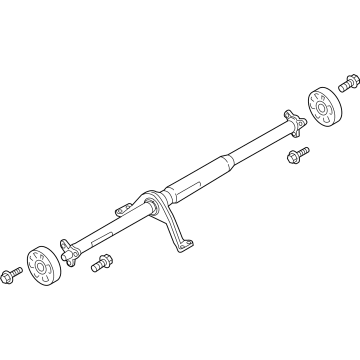
Audi Drive Shaft Part Number: 5WA-521-101-H
$646.31 MSRP: $835.57You Save: $189.26 (23%)Ships in 1-2 Business DaysProduct Specifications- Other Name: Prop Shaft
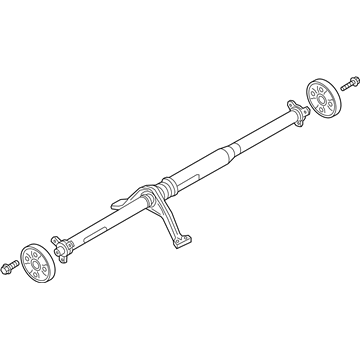
Audi Drive Shaft Part Number: 8S0-521-101-J
$2545.14 MSRP: $3055.39You Save: $510.25 (17%)Ships in 1-2 Business DaysProduct Specifications- Other Name: Prop Shaft
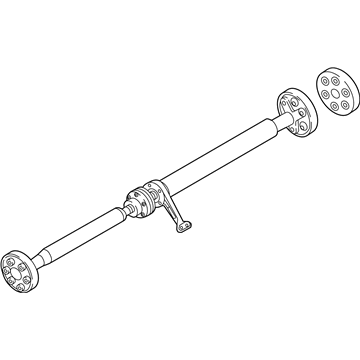
Audi Drive Shaft Part Number: 5N0-521-101-N
$1430.05 MSRP: $1716.74You Save: $286.69 (17%)Ships in 1-2 Business DaysProduct Specifications- Other Name: Prop Shaft
- Replaces: 5N0-521-101-H
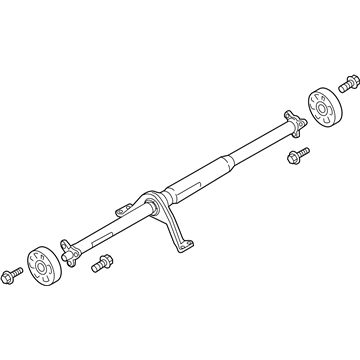
Audi Drive Shaft Part Number: 5Q0-521-101-BJ
$1430.05 MSRP: $1716.74You Save: $286.69 (17%)Ships in 1-2 Business DaysProduct Specifications- Other Name: Prop Shaft
- Replaces: 5Q0-521-101-BA, 5Q0-521-101-AT, 5Q0-521-101-AJ
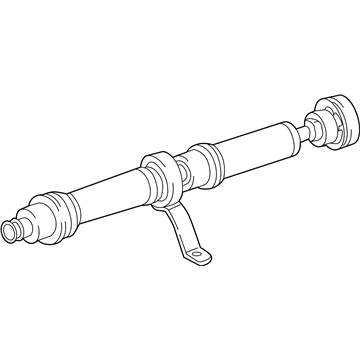
Audi Drive Shaft Part Number: 4M0-521-101-CK
$2382.38 MSRP: $2860.00You Save: $477.62 (17%)Ships in 1-2 Business DaysProduct Specifications- Other Name: Prop Shaft
- Replaced by: 4M0-521-101-EJ
- Replaces: 4M0-521-101-AQ
Audi Drive Shaft Part Number: 5Q0-521-101-BH
$1456.29 MSRP: $1748.24You Save: $291.95 (17%)Ships in 1-2 Business DaysProduct Specifications- Other Name: Prop Shaft
- Replaces: 5Q0-521-101-AS
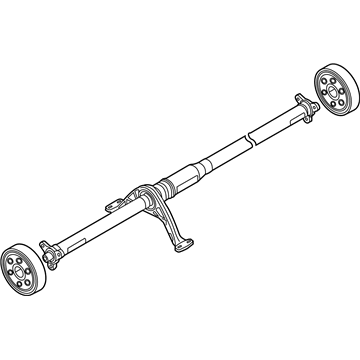
Audi Drive Shaft Assembly Part Number: 5QF-521-101-P
$1642.20 MSRP: $1971.43You Save: $329.23 (17%)Ships in 1-2 Business DaysProduct Specifications- Other Name: Prop Shaft; Drive Shaft
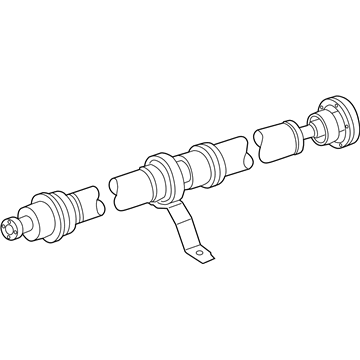
Audi Propeller Shaft Part Number: 8W6-521-101-D
$1145.36 MSRP: $1480.75You Save: $335.39 (23%)Ships in 1-2 Business DaysProduct Specifications- Other Name: Prop Shaft
- Replaced by: 8W6-521-101-H
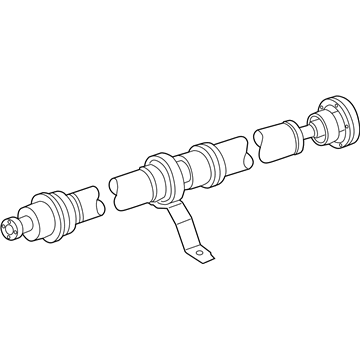
Audi Drive Shaft Part Number: 8W6-521-101-H
$1145.36 MSRP: $1480.75You Save: $335.39 (23%)Ships in 1-2 Business DaysProduct Specifications- Other Name: Prop Shaft; Propeller Shaft
- Replaces: 8W6-521-101-D
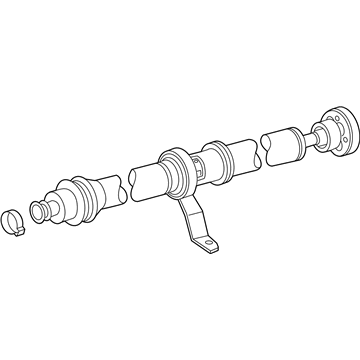
Audi Drive Shaft Assembly Part Number: 8W0-521-101-H
$2374.05 MSRP: $2850.00You Save: $475.95 (17%)Ships in 1-2 Business DaysProduct Specifications- Other Name: Prop Shaft; Drive Shaft
- Replaces: 8W0-521-101-D
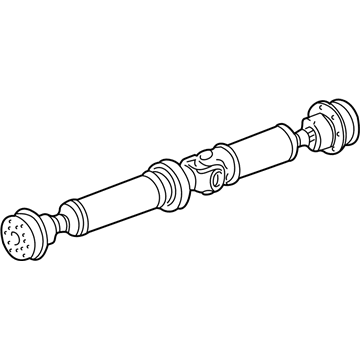
Audi Drive Shaft Part Number: 4B0-521-106-D
$1416.10 MSRP: $1700.00You Save: $283.90 (17%)Ships in 1-2 Business DaysProduct Specifications- Other Name: Prop Shaft
- Replaces: 4B0-521-106-A
Audi Drive Shaft Part Number: 8S0-521-101-G
$1829.02 MSRP: $2195.70You Save: $366.68 (17%)Ships in 1-2 Business DaysProduct Specifications- Other Name: Prop Shaft
- Replaces: 8S0-521-101-D
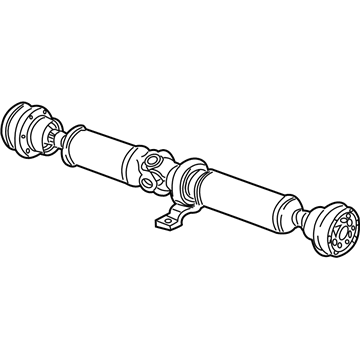
Audi Drive Shaft Assembly Part Number: 4D0-521-101-T
$1457.75 MSRP: $1750.00You Save: $292.25 (17%)Ships in 1-2 Business DaysProduct Specifications- Other Name: Prop Shaft; Drive Shaft
Audi Drive Shaft Assembly Part Number: 4D4-521-101-C
$1457.75 MSRP: $1750.00You Save: $292.25 (17%)Ships in 1-2 Business DaysProduct Specifications- Other Name: Prop Shaft; Drive Shaft
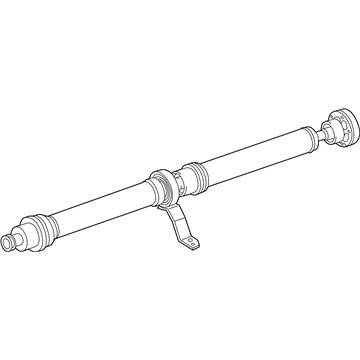
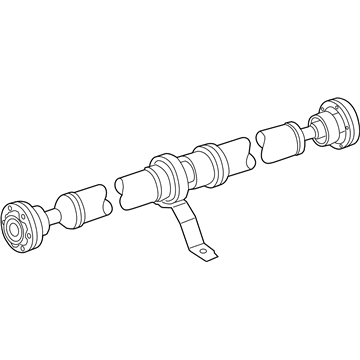
Audi Drive Shaft Part Number: 4N4-521-101-F
$2382.38 MSRP: $2860.00You Save: $477.62 (17%)Ships in 1-2 Business DaysProduct Specifications- Other Name: Prop Shaft
- Replaced by: 4N4-521-101-J
Audi Drive Shaft Part Number: 4N4-521-101-J
$2382.38 MSRP: $2860.00You Save: $477.62 (17%)Ships in 1-2 Business DaysProduct Specifications- Other Name: Prop Shaft
- Replaces: 4N4-521-101-F
Audi Drive Shaft Part Number: 4N4-521-101-H
$2765.35 MSRP: $3319.74You Save: $554.39 (17%)Ships in 1-2 Business DaysProduct Specifications- Other Name: Prop Shaft
- Replaces: 4N4-521-101
Audi Propeller Shaft Part Number: 8T0-521-101-AC
$1935.64 MSRP: $2323.70You Save: $388.06 (17%)Ships in 1-2 Business DaysProduct Specifications- Other Name: Prop Shaft; Drive Shaft
- Replaces: 8T0-521-101-R, 8T0-521-101-K
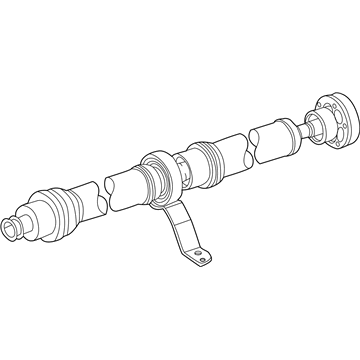
Audi Drive Shaft Part Number: 80A-521-101-C
$1212.66 MSRP: $1455.77You Save: $243.11 (17%)Ships in 1-2 Business DaysProduct Specifications- Other Name: Prop Shaft
Audi Drive Shaft Part Number: 80A-521-101-A
$1444.97 MSRP: $1734.66You Save: $289.69 (17%)Ships in 1-2 Business DaysProduct Specifications- Other Name: Prop Shaft
| Page 1 of 6 |Next >
1-20 of 103 Results
Audi Driveshaft
The Audi Driveshaft is responsible for sending engine power smoothly to distant axles, providing every model with sharp acceleration and stable traction. Audi as a brand has built its reputation on precision German engineering, a history that began in 1909 and now spans sleek sedans, versatile SUVs, and cutting-edge electric vehicles that wear the e-tron badge. Drivers love the way Audi combines sporty driving with comfort, and technologies such as Quattro all-wheel drive, Virtual Cockpit displays, and adaptive matrix headlights make everyday journeys safer and more interesting. Constant research into electric mobility and automated driving shows that Audi is committed to future-forward ideas while never losing the excitement that is expected by enthusiasts. Just as the vehicles push boundaries, the Driveshaft at the heart of the drivetrain conducts torque through a lightweight yet rigid tube and employs universal joints and splined sections to follow the movement of the suspension without vibration. Each Driveshaft is a balance of strength and reduced mass to ensure that power is not wasted, which helps with fuel economy and protects battery range in electric variants. Careful material selection ensures no twisting under high load but still allows quick rotation, which is very much the feel of confident launch that defines the lineup. By controlling the change in length over bumps and maintaining the rotation at different angles, the Driveshaft works in harmony with the Quattro systems, with all four wheels receiving equal force, reinforcing the handling qualities that make Audi stand out.
Stick with genuine OEM Driveshaft when you need quality that holds up. Audi crafts these parts to hit strict factory specs for every single unit. They also run each part through rigorous checks during production to maintain high quality. You can find exact Audi Driveshaft you need in our huge stock at AudiPartsGiant.com. You'll love our low, economical prices too. Every OEM part carries a real manufacturer's warranty, so you can buy with confidence. Returns aren't a headache here because our policy is simple. Plus, our speedy delivery gets orders out fast. Shop today and buy with total peace of mind.
Audi Driveshaft Parts and Q&A
- Q: How to check the front driveshaft and steering for Diesel engines on Audi 100?A:In order to examine thefront suspension and the steering, lift the front of the car and place it on axle stands. Regularly examine the balljoint dust covers and steering rack gaiters to see any splits, chafing or deterioration of these parts, as wear may result in loss of lubricant and dirt ingression, which may cause a rapid deterioration of these parts. On cars with power steering, inspect the hoses of the fluid system in relation to chafing, and look at the joints of the pipes and hoses to see whether there are any leakages, and at the joints of the pressure pipes by the steering gear rubber gaiters, which could be evidence of broken seals. Test roadwheel by holding at the 12 o clock and 6 o clock positions and ensuring that there is minimal free play as far as the hub bearing is concerned but that excessive movement is something that needs further examination. When the movement is less when the footbrake is pushed down then the bearings of the hubs will be defective; otherwise the suspension joints or mountings could be worn. Then be sure to hold the wheel at 9 and 3 o'clock to examine any movement, which might be an indication of wear in the hub bearings or balljoints of the steering track-rods. Test to understand whether the suspension mounting bushes are worn out, using a large screwdriver or a flat bar, expecting a certain degree of motion but observing excessive motion or obvious destruction. When the vehicle is on the wheels, make an assistant turn the steering wheel a little and there should be minimal lost movement between the steering wheel and the roadwheels, otherwise check the joints, mountings and steering column universal joints with regard to wear. In case of the suspension strut or shock absorber, verify that there is no leakage of fluid around the body or the rubber gaiter; the latter will be a sign of internal faults that will necessitate the replacement of the said strut or shock absorber and they should be replaced together in pairs on the same axle. Check the efficiency by bouncing the vehicle at all the corners; the vehicle should not rebound too much out of position. Check the top and bottom fixings. In the case of driveshafts, when the vehicle is elevated, rotate the steering wheel to full lock and rotate the roadwheel to check the outer CV joint rubber gaiters of the driveshafts are not torn or worn open and the clips that hold them in place are fixed. Do the same with the inner CV joints, replacing any torn gaiters. Lastly, inspect the general state of the CV joints by holding the driveshaft and attempting to rotate the wheel, and then holding the inner joint and rotating the driveshaft; any excessive movement is evidence of wear in the joints, driveshaft splines, or a loose retaining nut.
- Q: What precautions should be taken when handling the driveshaft to prevent bending and ensure proper installation on Audi A4?A:One should take care not to bend the driveshaft more than 25 degrees, and it is preferable to hold the two parts straight with a holding fixture, which can be a piece of 2x4 of the right size with wooden blocks on one end. When there is no available support that holds up the driveshaft in a level plane, a floor jack or assistance would be used. Today, there are no spare parts of the driveshaft, and in case such components as CV joint, U-joint, or center support bearing are damaged, the whole drive shaft has to be changed; it is advisable to hire a specialist on the driveline to get advice on the possible repair. One should start by raising the vehicle safely on jackstands and then take off the back part of the exhaust system. Peel off and remove the front rivets/mounting fasteners of the heat shield, one side of the mounting fastener at a time and align the center support bearing bracket tabs with the center of the outer holes of the floor pan. Align the relationship between the CV joints and flanges and clamp each end of the driveshaft and loosen the bolts that fix the CV joints to the companion flanges, avoiding the rotation with a chain wrench. Then detach the fasteners connecting the center support bearing bracket to the floorpan, and any shims and record their locations and then take pains to lower and remove the driveshaft underlying the vehicle. Removal should be reversed, so it is necessary to install fresh gasket material and remove old CV joint bolts and install new ones, install new gaskets, replace the heat shield (which dropped out of place) and install any shims in their correct places. Prior to installing the center support with the bracket fasteners, ensure that the centering tabs are aligned with the holes on the outer floorpan, and new sheet metal rivets/clips are fitted on the heat shield front mounting holes, and lastly, tight all the fasteners accordingly to the recommended torque values.

Related Audi Parts
 Audi Fuel Pump
 Audi Shift Knob
 Audi Wheel Bearing
 Audi Fog Light
 Audi Knock Sensor
 Audi Piston Ring
 Audi Air Injection Pump
 Audi Belt Tensioner Bolt
 Audi Coil Springs
 Audi Differential Cover
 Audi Pillar Panels
 Audi Strut Bearing
Browse by Model
100 Driveshaft 100 Quattro Driveshaft 80 Driveshaft 80 Quattro Driveshaft 90 Driveshaft 90 Quattro Driveshaft A3 Driveshaft A3 Quattro Driveshaft A3 Sportback e-tron Driveshaft A4 allroad Driveshaft A4 Driveshaft A4 Quattro Driveshaft A5 Driveshaft A5 Quattro Driveshaft A5 Sportback Driveshaft A6 allroad Driveshaft A6 Driveshaft A6 Quattro Driveshaft A7 Quattro Driveshaft A7 Sportback Driveshaft A8 Quattro Driveshaft allroad Driveshaft Allroad Quattro Driveshaft Coupe Quattro Driveshaft Q3 Driveshaft Q3 Quattro Driveshaft Q5 Driveshaft Q5 PHEV Driveshaft Q5 Sportback Driveshaft Q7 Driveshaft Q8 Driveshaft R8 Driveshaft RS Q8 Driveshaft RS3 Driveshaft RS5 Driveshaft RS5 Sportback Driveshaft RS6 Avant Driveshaft RS7 Driveshaft RS7 Sportback Driveshaft S3 Driveshaft S4 Driveshaft S5 Driveshaft S5 Sportback Driveshaft S6 Driveshaft S7 Driveshaft S7 Sportback Driveshaft S8 Driveshaft SQ5 Driveshaft SQ5 Sportback Driveshaft SQ7 Driveshaft SQ8 Driveshaft TT Driveshaft TT Quattro Driveshaft TT RS Quattro Driveshaft TTS Quattro Driveshaft V8 Quattro Driveshaft