×
- Hello
- Login or Register
- Quick Links
- Live Chat
- Track Order
- Parts Availability
- RMA
- Help Center
- Contact Us
- Shop for
- Audi Parts

My Garage
My Account
Cart
Genuine Audi Brake Pad Set
Disc Brake Pad Set- Select Vehicle by Model
- Select Vehicle by VIN
Select Vehicle by Model
orMake
Model
Year
Select Vehicle by VIN
For the most accurate results, select vehicle by your VIN (Vehicle Identification Number).
199 Brake Pad Sets found
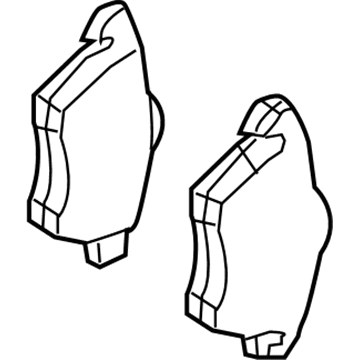
Audi Brake Pads Part Number: 8E0-698-151-H
$70.69 MSRP: $99.00You Save: $28.31 (29%)Ships in 1-2 Business DaysProduct Specifications- Other Name: Brake Lining; Brake Pad, Front Pad
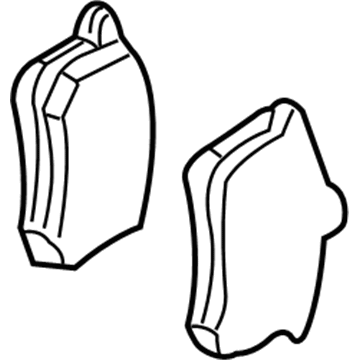
Audi Brake Pads Part Number: 4D0-698-451-G
$64.26 MSRP: $83.08You Save: $18.82 (23%)Ships in 1-2 Business DaysProduct Specifications- Other Name: Brake Lining; Brake Pad, Rear Pad
- Replaces: 4D0-698-451-B
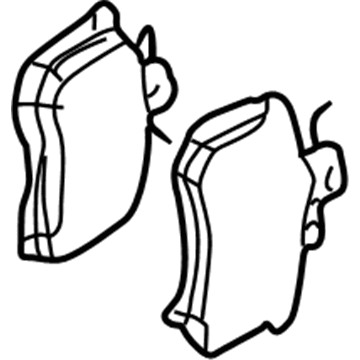
Audi Brake Pads Part Number: 1J0-698-451-N
$70.21 MSRP: $90.77You Save: $20.56 (23%)Ships in 1-2 Business DaysProduct Specifications- Other Name: Brake Lining; Brake Pad, Rear Pad
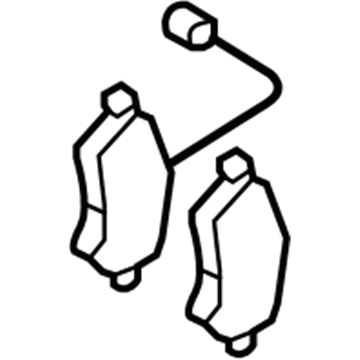
Audi Front Pads Part Number: 8E0-698-151-K
$71.40 MSRP: $92.31You Save: $20.91 (23%)Ships in 1-2 Business DaysProduct Specifications- Other Name: Brake Lining; Brake Pad, Front Pad
- Position: Front
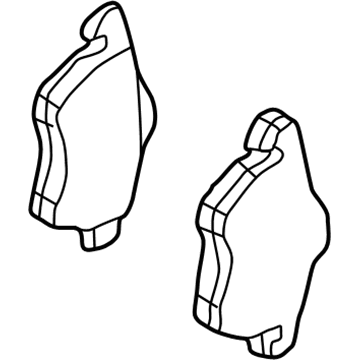
Audi Front Pads Part Number: 8D0-698-151-C
$74.96 MSRP: $96.91You Save: $21.95 (23%)Ships in 1-2 Business DaysProduct Specifications- Other Name: Brake Lining; Brake Pad, Front Pad
- Position: Front
- Replaces: 8D0-698-151-F, 8D0-698-151-A
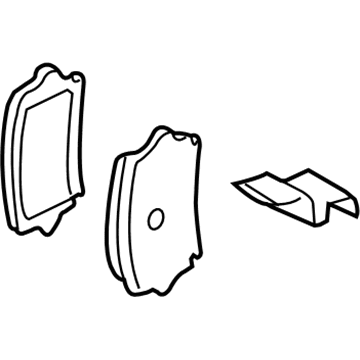
Audi Brake Pads Part Number: 1K0-698-451-H
$80.91 MSRP: $104.60You Save: $23.69 (23%)Ships in 1-2 Business DaysProduct Specifications- Other Name: Brake Lining; Brake Pad
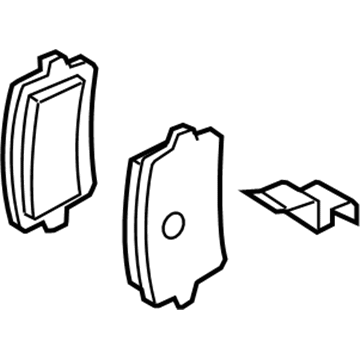
Audi Brake Pads Part Number: 1K0-698-451-K
$78.02 MSRP: $100.86You Save: $22.84 (23%)Ships in 1-2 Business DaysProduct Specifications- Other Name: Brake Lining; Brake Pad, Rear Pad
- Replaces: 1K0-698-451-E
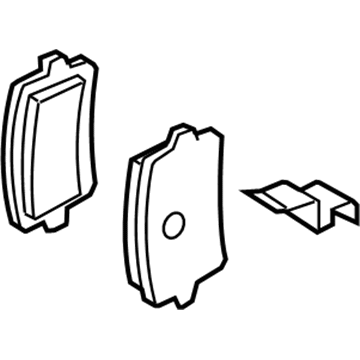
Audi Brake Pads Part Number: 1K0-698-451-P
$78.02 MSRP: $100.86You Save: $22.84 (23%)Ships in 1-2 Business DaysProduct Specifications- Other Name: Brake Lining; Brake Pad, Rear Pad
- Replaces: 1K0-698-451-G, 1K0-698-451-D
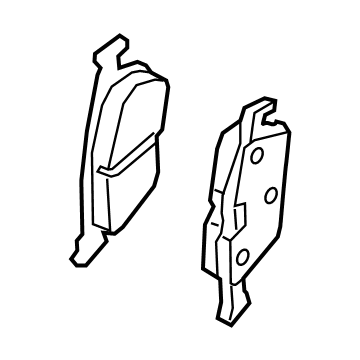
Audi Brake Pads Part Number: 3Q0-698-451-M
$80.91 MSRP: $104.60You Save: $23.69 (23%)Ships in 1-2 Business DaysProduct Specifications- Other Name: Brake Lining; Brake Pad
- Replaces: 3Q0-698-451-D
Audi Brake Pads Part Number: 5K0-698-451-D
$80.91 MSRP: $104.60You Save: $23.69 (23%)Ships in 1-2 Business DaysProduct Specifications- Other Name: Brake Lining; Brake Pad, Rear Pad
- Replaces: 5K0-698-451-A, 5K0-698-451-C
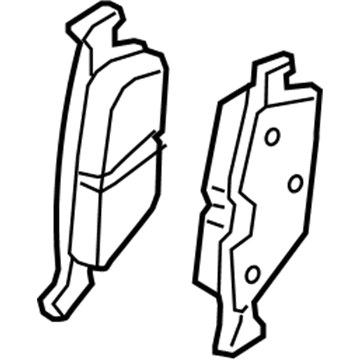
Audi Brake Pads Part Number: 5Q0-698-451-AG
$89.24 MSRP: $115.37You Save: $26.13 (23%)Ships in 1-2 Business DaysProduct Specifications- Other Name: Brake Lining; Brake Pad, Rear Pad
- Replaces: 8V0-698-451-H
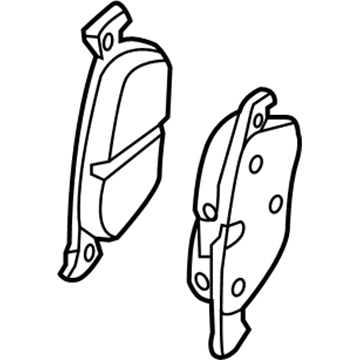
Audi Brake Pads Part Number: 5Q0-698-451-AK
$80.91 MSRP: $104.60You Save: $23.69 (23%)Ships in 1-2 Business DaysProduct Specifications- Other Name: Brake Lining; Brake Pad, Rear Pad
- Replaces: 5Q0-698-451-N, 5Q0-698-451-C, 8V0-698-451-B
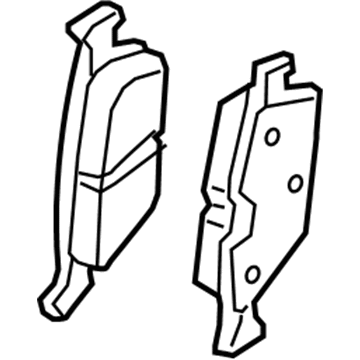
Audi Brake Pads Part Number: 5Q0-698-451-T
$89.24 MSRP: $115.37You Save: $26.13 (23%)Ships in 1-2 Business DaysProduct Specifications- Other Name: Brake Lining; Brake Pad, Rear Pad
- Replaces: 3Q0-698-451, 5Q0-698-451-P, 8V0-698-451-A, 8V0-698-451-D
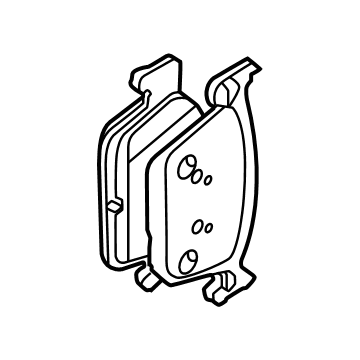
Audi Brake Pads Part Number: 5WA-698-151-T
$94.00 MSRP: $121.52You Save: $27.52 (23%)Ships in 1-2 Business DaysProduct Specifications- Other Name: Brake Lining
- Replaced by: 5WA-698-151-AJ
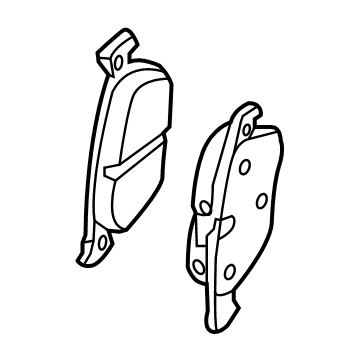
Audi Brake Pads Part Number: 5WA-698-451-F
$89.24 MSRP: $115.37You Save: $26.13 (23%)Ships in 1-2 Business DaysProduct Specifications- Other Name: Brake Lining; Brake Pad, Rear Pad
- Replaces: 5WA-698-451-C
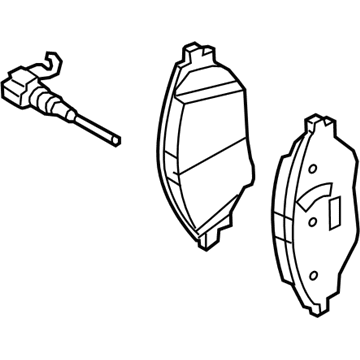
Audi Front Pads Part Number: 8V0-698-151-D
$78.02 MSRP: $100.86You Save: $22.84 (23%)Ships in 1-2 Business DaysProduct Specifications- Other Name: Brake Lining; Brake Pad, Front Pad
- Position: Front
Audi Front Pads Part Number: 5WA-698-151-N
$94.01 MSRP: $121.55You Save: $27.54 (23%)Ships in 1-2 Business DaysProduct Specifications- Other Name: Brake Lining; Brake Pad, Front Pad
- Position: Front
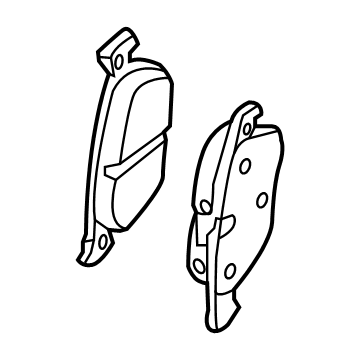
Audi Brake Pads Part Number: 5WA-698-451-E
$91.63 MSRP: $118.47You Save: $26.84 (23%)Ships in 1-2 Business DaysProduct Specifications- Other Name: Brake Lining; Brake Pad, Rear Pad
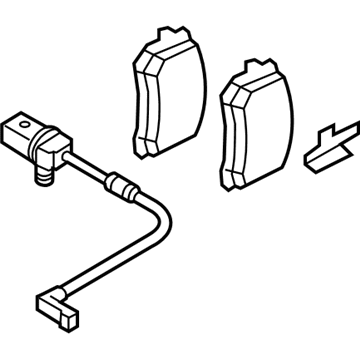
Audi Brake Pads Part Number: 4G0-698-451-J
$80.53 MSRP: $104.11You Save: $23.58 (23%)Ships in 1-2 Business DaysProduct Specifications- Other Name: Brake Lining; Brake Pad, Rear Pad
- Replaces: 4G0-698-451-A
Audi Front Pads Part Number: 8V0-698-151-G
$82.94 MSRP: $107.23You Save: $24.29 (23%)Ships in 1-2 Business DaysProduct Specifications- Other Name: Brake Lining; Brake Pad, Front Pad
- Position: Front
| Page 1 of 10 |Next >
1-20 of 199 Results
Audi Brake Pad Set
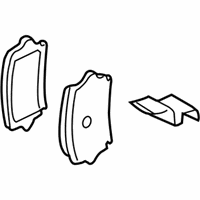
Audi Brake Pad Set every driver has the instant, controlled deceleration that converts speed into safety thanks to high grip compounds and robust backing plates, which when the driver presses the pedal, firmly press the rotor. Audi, known since 1909 for sporty sedans, Quattro traction and futuristic Virtual Cockpit displays, continues to win fans with vehicles that combine performance and everyday comfort. The company is a pioneer in e-tron electric power, tests autonomous systems on open roads and perfects lightweight frames for agile handling, demonstrating that innovation is at the core of Audi progress. At the exact same time, the Brake Pad Set is a crucial connection between those technologies and actual world safety, transforming kinetic energy to heat but resisting fade through the course of city commutes and mountain descents. Each Brake Pad Set is matched with factory tuned calipers for balanced feel, low dust and quiet stops, providing support for the full lineup from compact hatchback to commanding SUV without restricting compatibility to one model, supporting Audi versatility. Drivers like the fact that the set creates a steady bite through rain, snow or summer heat, imitating the surefooted traction of Quattro. Routine checks enable owners to replace worn pads ahead of rotors becoming worn, maintaining the crisp pedal response for which every Audi journey is known. Thanks to thoughtful materials and easy fitment, the Brake Pad Set allows confidence to stay high and adventures to keep rolling.
Stick with genuine OEM Brake Pad Set when you need quality that holds up. Audi crafts these parts to hit strict factory specs for every single unit. They also run each part through rigorous checks during production to maintain high quality. You can find exact Audi Brake Pad Set you need in our huge stock at AudiPartsGiant.com. You'll love our low, economical prices too. Every OEM part carries a real manufacturer's warranty, so you can buy with confidence. Returns aren't a headache here because our policy is simple. Plus, our speedy delivery gets orders out fast. Shop today and buy with total peace of mind.
Audi Brake Pad Set Parts and Q&A
- Q: What should be done with the Brake Pad Set caliper guide pin bolts whenever they are unscrewed on Audi 100?A:Where caliper guide pin bolts are unscrewed, they have to be renewed. Start by chocking the front wheels and lifting up the stands and removing the rear wheels making sure that at least one of the wheel bolts is re-fitted back in the correct hub to hold the brake discs in place. Pull the handbrake lever and push the handbrake cable adjuster as far as it will go with both caliper handbrake levers touching their stops. Unscrew and loosen bolts of the caliper guide pin without allowing the guide pins to rotate, and dispose of the old bolts and install new ones when fitting back. Move the caliper off the brake pads then firmly attached it to the suspension strut using wire and ensure that the caliper is not hanging unsupported on the flexible brake hose. Take out the two brake pads of the mounting bracket of the caliper, and measure the thickness of each pad, rejection to be made of those that are worn to or below the desired minimum thickness, and of any that are oily or greasy. Should the pads still be serviceable clean them and check the caliper and piston and see whether they are damaged or not even leaking. It is possible that new brake pads should be installed, in that case, fully retract the piston into the caliper bore by turning it clockwise, but you have to check the level of fluid in the master cylinder reservoir to avoid spillage. Install the pads into the mounting bracket, be sure the pads are correctly positioned against the brake disc, and carefully slip the caliper back in place and install the new guide pin bolts, and screw the bolts to the required tightness. The same procedure is repeated with the other rear brake caliper and set up the rear brakes. With these models (that are not fitted with self-leveling rear suspension) position the pressure regulating valve lever all the way to the rear axle, start the engine and press the brake pedal to ensure the pads touch the discs and ensure that the discs are rotating freely and point the handbrake. On models with self-leveling rear suspension, lower the car to the ground, switch on the engine so that the suspension can stabilize and repeat the process to make sure the brakes work properly. In case of A6 models, start the engine, press the brake pedal, watch the rotation of the disc, set the handbrake and lastly look at the level of the hydraulic fluid.
- Q: How can the outer brake pad set be checked without removing the wheels for Petrol engines on Audi A3?A:The outer brake pads can be checked without removing the wheels by observing them through the holes in the wheels, and on models with steel wheels, the wheel trim should be removed. The thickness of the pad lining must not be less than the specified dimension. If the outer pads are worn near their limits, it is advisable to check the inner pads as well; this involves applying the handbrake, jacking up the vehicle, and supporting it on axle stands before removing the roadwheels. A steel rule can be used to measure the thickness of the brake pads and compare it with the minimum thickness specified. For a thorough inspection, the brake pads should be removed and cleaned, allowing for a check of the caliper's operation and a full examination of the brake disc on both sides. If any pad's friction material is worn to the specified minimum thickness or less, all four pads at the front or rear must be replaced as a set. Upon completing the check, the roadwheels should be refitted, and the vehicle lowered to the ground.

Related Audi Parts
 Audi Car Key
 Audi Valve Cover Gasket
 Audi Hood Latch
 Audi Transmission Control Module
 Audi ABS Control Module
 Audi Clutch Master Cylinder
 Audi CV Joint
 Audi Fuel Cap
 Audi Oil Cooler Hose
 Audi Strut Bearing
 Audi Weather Strip
 Audi Wheel Hub Bolt
Browse by Model
100 Brake Pad Set 4000 Brake Pad Set 4000 Quattro Brake Pad Set 5000 Brake Pad Set 5000 Quattro Brake Pad Set 80 Brake Pad Set 80 Quattro Brake Pad Set 90 Brake Pad Set 90 Quattro Brake Pad Set A3 Brake Pad Set A3 Quattro Brake Pad Set A3 Sportback e-tron Brake Pad Set A4 allroad Brake Pad Set A4 Brake Pad Set A4 Quattro Brake Pad Set A5 Brake Pad Set A5 Quattro Brake Pad Set A5 Sportback Brake Pad Set A6 allroad Brake Pad Set A6 Brake Pad Set A6 Quattro Brake Pad Set A7 Quattro Brake Pad Set A7 Sportback Brake Pad Set A8 Brake Pad Set A8 Quattro Brake Pad Set allroad Brake Pad Set Allroad Quattro Brake Pad Set Cabriolet Brake Pad Set Coupe Brake Pad Set e-tron GT Brake Pad Set e-tron Quattro Brake Pad Set e-tron S Brake Pad Set e-tron S Sportback Brake Pad Set e-tron Sportback Brake Pad Set Q3 Brake Pad Set Q3 Quattro Brake Pad Set Q4 e-tron Brake Pad Set Q4 e-tron Sportback Brake Pad Set Q5 Brake Pad Set Q5 PHEV Brake Pad Set Q5 Sportback Brake Pad Set Q7 Brake Pad Set Q8 Brake Pad Set Q8 e-tron Brake Pad Set Q8 e-tron Sportback Brake Pad Set Quattro Brake Pad Set R8 Brake Pad Set RS Q8 Brake Pad Set RS3 Brake Pad Set RS4 Brake Pad Set RS5 Brake Pad Set RS5 Sportback Brake Pad Set RS6 Avant Brake Pad Set RS7 Brake Pad Set RS7 Sportback Brake Pad Set S3 Brake Pad Set S4 Brake Pad Set S5 Brake Pad Set S5 Sportback Brake Pad Set S6 Brake Pad Set S7 Brake Pad Set S7 Sportback Brake Pad Set S8 Brake Pad Set SQ5 Brake Pad Set SQ5 Sportback Brake Pad Set SQ7 Brake Pad Set SQ8 Brake Pad Set TT Brake Pad Set TT Quattro Brake Pad Set TT RS Quattro Brake Pad Set TTS Quattro Brake Pad Set