×
- Hello
- Login or Register
- Quick Links
- Live Chat
- Track Order
- Parts Availability
- RMA
- Help Center
- Contact Us
- Shop for
- Audi Parts

My Garage
My Account
Cart
Genuine Audi A4 Clutch Disc
Friction Disc- Select Vehicle by Model
- Select Vehicle by VIN
Select Vehicle by Model
orMake
Model
Year
Select Vehicle by VIN
For the most accurate results, select vehicle by your VIN (Vehicle Identification Number).
8 Clutch Discs found
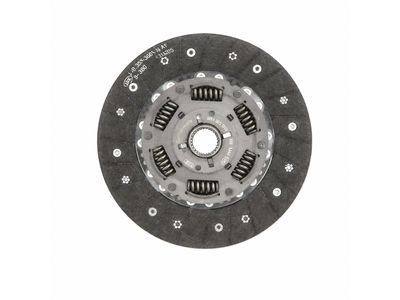
Audi A4 Disc Part Number: 0B4-141-031
$402.22 MSRP: $563.34You Save: $161.12 (29%)Ships in 1-2 Business Days
Audi A4 Disc Part Number: 06D-141-031-BX
$199.26 MSRP: $278.33You Save: $79.07 (29%)Ships in 1-2 Business DaysAudi A4 Disc Part Number: 0B1-141-031-L
$408.17 MSRP: $571.67You Save: $163.50 (29%)Ships in 1-2 Business DaysAudi A4 Disc Part Number: 038-141-033-C
$416.49 MSRP: $583.32You Save: $166.83 (29%)Ships in 1-2 Business DaysAudi A4 Disc Part Number: 06C-141-031-B
$496.81 MSRP: $695.82You Save: $199.01 (29%)Ships in 1-2 Business DaysAudi A4 Disc Part Number: 06H-141-031-A
$511.69 MSRP: $716.65You Save: $204.96 (29%)Ships in 1-2 Business Days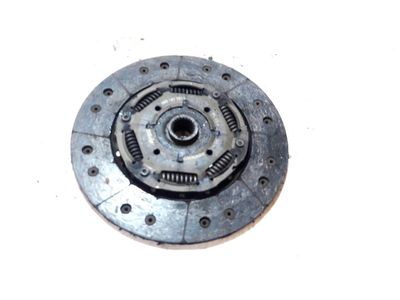
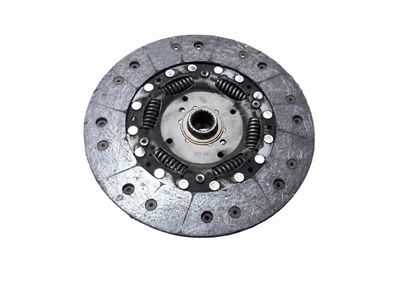
Audi A4 Disc Part Number: 06B-141-031-N
$327.24 MSRP: $458.32You Save: $131.08 (29%)Ships in 1-2 Business DaysAudi A4 Disc Part Number: 074-141-031-EX
Audi A4 Clutch Disc
Choose original equipment manufacturer Clutch Disc for great performance and strong durability. They use Audi's official craftsmanship and high-grade materials, and meet strict quality standards. Are you looking for quality Clutch Disc at a good price? Come to our online store. We carry a wide range of genuine parts for your Audi A4 and the prices are competitive. Each part comes with the manufacturer's warranty. You can install with confidence and get steady results. Over time, you'll save money and avoid hassle. Keep your maintenance simple and protect your vehicle with OEM parts. Get the quality your A4 needs now.
Audi A4 Clutch Disc Parts and Q&A
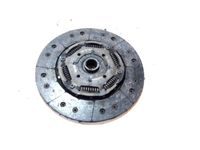
- Q:What are the key components and functions of the Clutch Disc and Pressure Plate in a manual transaxle clutch system on Audi A4?A:All the models with manual transaxle have a single dry plate, diaphragm spring type clutch, with a splined hub, to enable the clutch disc to slide on the splines of the input shaft of the transaxle. The pressure plate is in direct contact with the clutch, by the diaphragm spring pressure in the pressure plate. The clutch release system is hydraulically controlled and consists of the clutch pedal, the Clutch Master Cylinder, the clutch release cylinder and the hydraulic line between the two cylinders. Upon the release of the clutch by pressing the clutch pedal, the master cylinder causes movement to be searched to the release cylinder causing the clutch release lever to be activated. As the lever pivot involves the release bearing, the fingers of the diaphragm spring of the pressure plate assembly, and the clutch plate is released. Clutch terms may differ with the slave cylinder being known as the clutch release cylinder, the driven plate being known as the clutch plate or disc, the pressure plate assembly being known as the clutch cover and the Clutch Release Bearing being known as the throw-out bearing. Besides changing visibly damaged parts, the initial test to identify the clutch system failure involves paying attention to the spin down time in engine at idle speed with transaxle in Neutral, disengaging the clutch, and shifting into Reverse without any grinding sound, which would be an indication of the problem with the pressure plate or the clutch disc. To confirm full release of the clutch, the engine is to be running with the parking brake engaged and the clutch pedal approximately 1.5 inches above the floor and switch between 1 st and Reverse gears; the rough movement of the gears indicates a component malfunction. A physical examination of the clutch pedal pivot to be stuck or excessively worn should also be carried out as well as leaks in the hydraulic lines at the master and release cylinders, and bleeding the system (where applicable).
Related Audi A4 Parts
 Audi A4 Clutch Slave Cylinder
 Audi A4 Flywheel
 Audi A4 Clutch Release Bearing
 Audi A4 Valve Body
 Audi A4 Clutch Fork
 Audi A4 Clutch Master Repair Kit
 Audi A4 Clutch Slave Repair Kit
 Audi A4 Pilot Bearing
 Audi A4 Pressure Plate
 Audi A4 Shift Cable
 Audi A4 Transfer Case Bearing
 Audi A4 Transmission Assembly
Browse by Year
2016 Clutch Disc 2015 Clutch Disc 2014 Clutch Disc 2013 Clutch Disc 2012 Clutch Disc 2011 Clutch Disc 2010 Clutch Disc 2009 Clutch Disc 2007 Clutch Disc 2006 Clutch Disc 2005 Clutch Disc 2004 Clutch Disc 2003 Clutch Disc 2002 Clutch Disc 2001 Clutch Disc 2000 Clutch Disc 1999 Clutch Disc 1998 Clutch Disc 1997 Clutch Disc