×
- Hello
- Login or Register
- Quick Links
- Live Chat
- Track Order
- Parts Availability
- RMA
- Help Center
- Contact Us
- Shop for
- Audi Parts

My Garage
My Account
Cart
Genuine Audi A3 Flywheel
Clutch Flywheel- Select Vehicle by Model
- Select Vehicle by VIN
Select Vehicle by Model
orMake
Model
Year
Select Vehicle by VIN
For the most accurate results, select vehicle by your VIN (Vehicle Identification Number).
4 Flywheels found
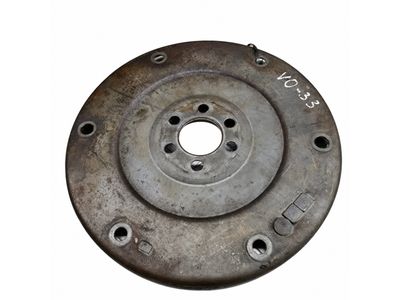
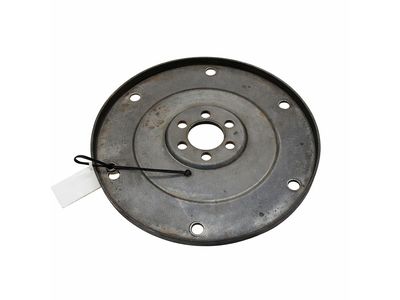
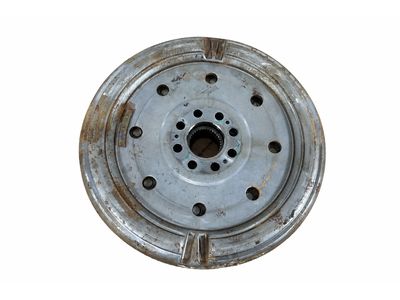
Audi A3 Drive Plate Part Number: 038-105-327-B
$141.23 MSRP: $197.80You Save: $56.57 (29%)Ships in 1-2 Business Days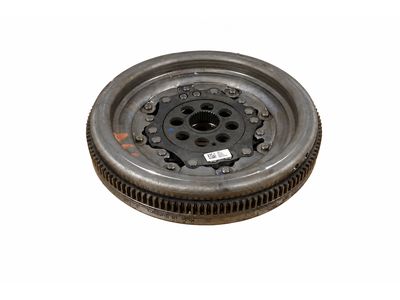
Audi A3 Drive Plate Part Number: 06K-105-266-J
$654.49 MSRP: $846.14You Save: $191.65 (23%)Ships in 1-2 Business Days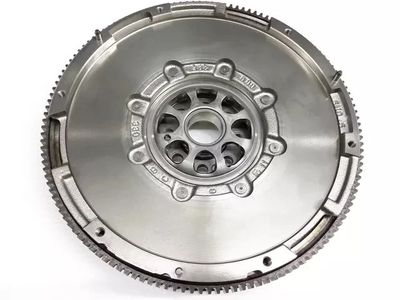
Audi A3 Flywheel Part Number: 06J-105-266-H
$1112.64 MSRP: $1438.45You Save: $325.81 (23%)Ships in 1-2 Business Days
Audi A3 Drive Plate Part Number: 06J-105-266-D
$1160.24 MSRP: $1499.98You Save: $339.74 (23%)Ships in 1-2 Business Days
Audi A3 Flywheel
The Audi A3 Flywheel adjusts engine power by storing rotational energy so that the engine can provide constant movement as well as support starting and gear changes. All Audis with a manual gearbox use the heavy inertia of the disc to smooth the combustion pulses of the engine and give the Flywheel ring gear something for the starter to engage so the crank will be spinning within a short period. When the engine has fired, the Audi clutch plate clamped between the pressure plate and machined face permits the transmission of torque to the transmission as the Audi driver controls the engagement. It is scribed on by heat, scoring or warpage, and any shallow scribes can be skimmed off in a solid Flywheel within a narrow range of material limits; however, a deep groove can be more wisely replaced. On subsequent A3 series the brand also uses an Audi dual mass Flywheel in which primary and secondary masses are decoupled with spring dampers to absorb vibration and muffle shifts throughout the Audi drivetrain. Compared to the single-piece style, a dual mass unit cannot be refurbished with the same ease, and its inner springs are subject to failure, becoming clunky or over shaking and indicative of the need to replace the unit. Whichever type it may be, chipped ring-gear teeth or extreme runout will affect the smoothness of starting, and therefore it is important to ensure that the disc is in good condition for the loyal Audi fanatics.
Choose original equipment manufacturer Flywheel for great performance and strong durability. They use Audi's official craftsmanship and high-grade materials, and meet strict quality standards. Are you looking for quality Flywheel at a good price? Come to our online store. We carry a wide range of genuine parts for your Audi A3 and the prices are competitive. Each part comes with the manufacturer's warranty. You can install with confidence and get steady results. Over time, you'll save money and avoid hassle. Keep your maintenance simple and protect your vehicle with OEM parts. Get the quality your A3 needs now.
Audi A3 Flywheel Parts and Q&A
- Q:How to remove and refit the flywheel/driveplate for 1.6 litre DOHC petrol engines on Audi A3?A:To remove the gearbox on manual transmission models, first take out the clutch. For automatic transmission models, remove the automatic transmission. The flywheel/driveplate bolts are offset for correct fitment; unscrew them while holding the flywheel/driveplate stationary. Temporarily insert a bolt in the cylinder block and use a screwdriver to hold the flywheel/driveplate, or create a holding tool. Discard the bolts, as new ones are required for refitting. Lift the flywheel/driveplate from the crankshaft and recover the engine-to-transmission intermediate plate if it is loose. Inspect the flywheel/driveplate for wear and damage, checking the starter ring gear for excessive tooth wear; if found, the entire flywheel/driveplate must be replaced since the ring gear is not available separately. If the clutch contact surface is excessively worn, it may be possible to have it reground by a specialist. For refitting, reverse the removal process, ensuring the engine-to-transmission intermediate plate is in place before fitting the flywheel/driveplate. Use new bolts for the flywheel or driveplate, coating the threads with locking fluid before insertion, and tighten the securing bolts to the specified torque.
- Q:What are the steps and considerations for refitting the flywheel or driveplate for 1.6 litre SOHC petrol engines on Audi A3?A:New flywheel/driveplate securing bolts will be required on refitting. For removal, on manual transmission models, the gearbox and clutch must be removed, while on automatic transmission models, the automatic transmission should be taken out. The flywheel/driveplate bolts are offset for correct fitment; unscrew them while holding the flywheel/driveplate stationary, using a temporary bolt in the cylinder block and a screwdriver or a holding tool. Lift the flywheel/driveplate from the crankshaft, noting the location of the shim (if applicable) between the driveplate and the crankshaft, as well as the spacer under the securing bolts. Recover the engine-to-transmission plate if it is loose. For inspection, check the flywheel/driveplate for wear and damage, particularly the starter ring gear for excessive tooth wear. If the driveplate or its ring gear is damaged, the complete driveplate must be renewed, while the flywheel ring gear may be renewed separately, preferably by an Audi dealer. If the clutch friction face is discolored or excessively scored, regrinding may be possible, but this should also be done by an Audi dealer. For refitting, follow the reverse order of removal, ensuring the engine-to-transmission plate is in place before fitting the flywheel/driveplate. On automatic transmission models, temporarily refit the driveplate using old bolts tightened to 30 Nm and check the distance from the rear machined face of the cylinder block to the torque converter mounting face on the driveplate, which should be between 19.5 and 21.1 mm. If necessary, fit a shim to achieve the correct dimension. The raised pip on the spacer under the securing bolts must face the torque converter, and new bolts should be used for refitting the flywheel or driveplate, with the threads coated in locking fluid before insertion. Finally, tighten the securing bolts to the specified torque.
Related Audi A3 Parts
 Audi A3 Clutch Slave Cylinder
 Audi A3 Valve Body
 Audi A3 Automatic Transmission Filter
 Audi A3 Automatic Transmission Shift Levers
 Audi A3 Clutch Hydraulic Lines
 Audi A3 Clutch Master Repair Kit
 Audi A3 CV Joint Companion Flange
 Audi A3 Shift Cable
 Audi A3 Transfer Case
 Audi A3 Transmission Assembly