×
- Hello
- Login or Register
- Quick Links
- Live Chat
- Track Order
- Parts Availability
- RMA
- Help Center
- Contact Us
- Shop for
- Audi Parts

My Garage
My Account
Cart
Genuine Audi TT Quattro Power Steering Pump
Power Steering Pump Unit- Select Vehicle by Model
- Select Vehicle by VIN
Select Vehicle by Model
orMake
Model
Year
Select Vehicle by VIN
For the most accurate results, select vehicle by your VIN (Vehicle Identification Number).
1 Power Steering Pump found
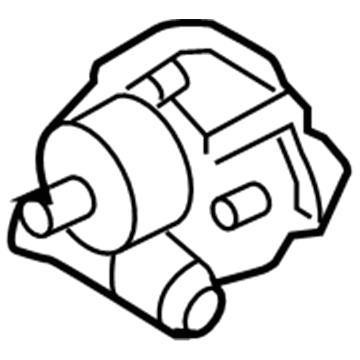
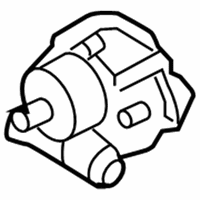
Audi TT Quattro Power Steering Pump Part Number: 8N0-145-154-A
$386.75 MSRP: $541.67You Save: $154.92 (29%)Ships in 1-2 Business Days
Audi TT Quattro Power Steering Pump
Choose original equipment manufacturer Power Steering Pump for great performance and strong durability. They use Audi's official craftsmanship and high-grade materials, and meet strict quality standards. Are you looking for quality Power Steering Pump at a good price? Come to our online store. We carry a wide range of genuine parts for your Audi TT Quattro and the prices are competitive. Each part comes with the manufacturer's warranty. You can install with confidence and get steady results. Over time, you'll save money and avoid hassle. Keep your maintenance simple and protect your vehicle with OEM parts. Get the quality your TT Quattro needs now.
Audi TT Quattro Power Steering Pump Parts and Q&A
- Q:How to check the power steering fluid level and replace a faulty Power Steering Pump on Audi TT Quattro?A:To check the power steering fluid level, first carry out a leak test. Secondly, carry out a pressure test to find out the malfunctioning part. Power steering pump not repairable. It is to be replaced, if defective. At the idle stage, the power steering pump has a delivery pressure of 110 - 120 bar (1595 - 1740 psi). Replacement pumps are not filled with fluid prior to installation as they are not packed with fluid. To prevent the replacement pump from being damaged or becoming noisy, fill the pump with hydraulic fluid (G 002 000) and rotate it by hand before installing. The system has a requirement for fluid of about 0.7 to 0.9 liters; do not use old fluid. Ensure to replace seals and discard old materials. Start out by taking away the lower center and right sound absorber panels. This will lessen tension on the ribbed belt. Also, mark the running direction if you plan to reuse it. Using an Allen key, lock the ribbed belt tensioner while removing the ribbed belt. Once the belt is removed, the pulley can be used to access the power steering pump. Using suitable clamps, clamp the supply and pressure lines. If applicable, disconnect the harness connector from the power steering pressure switch. Unbolt the banjo bolt to detach the pressure line. To remove the supply line, you will need to release the spring type hose clamp before unbolting the power steering pump from the bracket. When you are putting in a new pump, fill the pump with hydraulic fluid and rotate the pump by hand. To properly install the power steering pump, carefully follow the steps in reverse order. Ensure that the mounting bolts are tightened to specification. Then, attach the supply line using a spring-type hose clamp. Also, be sure to align the seam of the pump housing with the transverse mark.
Related Audi TT Quattro Parts
 Audi TT Quattro Ignition Lock Cylinder
 Audi TT Quattro Power Steering Cooler
 Audi TT Quattro Power Steering Hose
 Audi TT Quattro Power Steering Pump Pulley
 Audi TT Quattro Power Steering Reservoir
 Audi TT Quattro Rack & Pinion Bushing
 Audi TT Quattro Rack And Pinion
 Audi TT Quattro Radius Heat Shield
 Audi TT Quattro Steering Column Cover
 Audi TT Quattro Steering Wheel
 Audi TT Quattro Tie Rod
 Audi TT Quattro Tie Rod End