×
- Hello
- Login or Register
- Quick Links
- Live Chat
- Track Order
- Parts Availability
- RMA
- Help Center
- Contact Us
- Shop for
- Audi Parts

My Garage
My Account
Cart
Genuine Audi TT Ignition Lock Cylinder
Ignition Key Lock Cylinder- Select Vehicle by Model
- Select Vehicle by VIN
Select Vehicle by Model
orMake
Model
Year
Select Vehicle by VIN
For the most accurate results, select vehicle by your VIN (Vehicle Identification Number).
3 Ignition Lock Cylinders found
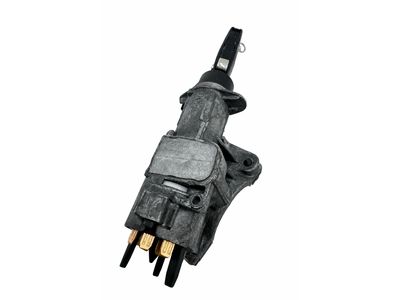
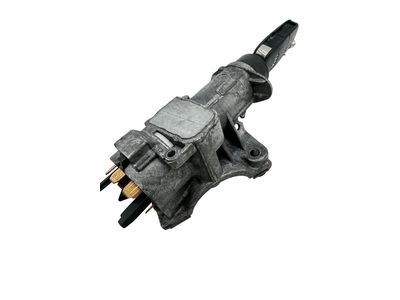
Audi TT Ignition Lock Cylinder Part Number: 4D0-905-855-G
$308.50 MSRP: $432.06You Save: $123.56 (29%)Ships in 1-2 Business Days
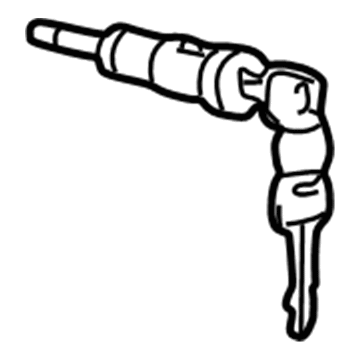
Audi TT Ignition Lock Cylinder Part Number: 107-905-855-CF
$172.54 MSRP: $241.65You Save: $69.11 (29%)Ships in 1-2 Business Days
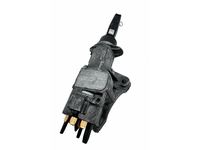
Audi TT Ignition Lock Cylinder Part Number: 8E0-905-855-C
$318.31 MSRP: $445.82You Save: $127.51 (29%)Ships in 1-2 Business Days
Audi TT Ignition Lock Cylinder
Choose original equipment manufacturer Ignition Lock Cylinder for great performance and strong durability. They use Audi's official craftsmanship and high-grade materials, and meet strict quality standards. Are you looking for quality Ignition Lock Cylinder at a good price? Come to our online store. We carry a wide range of genuine parts for your Audi TT and the prices are competitive. Each part comes with the manufacturer's warranty. You can install with confidence and get steady results. Over time, you'll save money and avoid hassle. Keep your maintenance simple and protect your vehicle with OEM parts. Get the quality your TT needs now.
Audi TT Ignition Lock Cylinder Parts and Q&A
- Q:How to replace the Ignition Lock Cylinder equipped with an anti-theft immobilizer on Audi TT?A:On vehicles equipped with anti-theft immobilizer, the lock cylinder has the immobilizer induction coil attached to it and cannot be separately replaced; therefore, if the former has a fault, the lock cylinder is replaced. When a lock cylinder is replaced to keep a one key system for the vehicle, the key code number are vehicle identification number (which manufacturers refer to as the VIN) must be supplied. A spare key is needed to remove the lock cylinder. This requires an ignition key with flat grip only. Initially, extend the telescopic steering column to its maximum and centre the steering wheel with the steering facing straight ahead. To prevent accidental contact from occurring, disconnect the negative battery cable and cover it. To begin with the removal of steering angle sensor and steering column switches, thedriver's airbag, steering wheel and left side... Separate the electrical harness connector from the immobilizer induction coil located behind the Ignition Switch. For automatic transmission vehicles, place the selector lever in "P" and turn the key to the on position. Gently elevate the ignition interlock lever so that you can draw the cable from the ignition lock housing. insert the spare key and turn it to ON, ensuring that the recess in the ignition trim aligns with hole in ignition lock. Position the steel wire having a diameter of nearly 1.5 mm into the hole next to the ignition key and draw the ignition cylinder out of the steering lock housing. While installation, insert the spare key into the ignition cylinder and turn on the key position, push the wire in as far as it can go, and then push the lock cylinder together with the ignition key all the way into the steering lock housing. Remove the wire and push the lock cylinder in until you hear a click from the catch. Then, install the electrical harness connector on the ignition key reader coil at the back of the ignition switch. Reinstall the steering column switches, steering wheel, and airbag.
Related Audi TT Parts
 Audi TT Steering Wheel
 Audi TT Power Steering Hose
 Audi TT Power Steering Pump
 Audi TT Power Steering Reservoir
 Audi TT Rack And Pinion
 Audi TT Ignition Lock Assembly
 Audi TT Power Steering Cooler
 Audi TT Power Steering Pump Pulley
 Audi TT Rack and Pinion Boot
 Audi TT Radius Heat Shield
 Audi TT Steering Column Cover
 Audi TT Tie Rod