×
- Hello
- Login or Register
- Quick Links
- Live Chat
- Track Order
- Parts Availability
- RMA
- Help Center
- Contact Us
- Shop for
- Audi Parts

My Garage
My Account
Cart
Genuine Audi 90 Rack and Pinions
Steering Rack- Select Vehicle by Model
- Select Vehicle by VIN
Select Vehicle by Model
orMake
Model
Year
Select Vehicle by VIN
For the most accurate results, select vehicle by your VIN (Vehicle Identification Number).
5 Rack and Pinions found
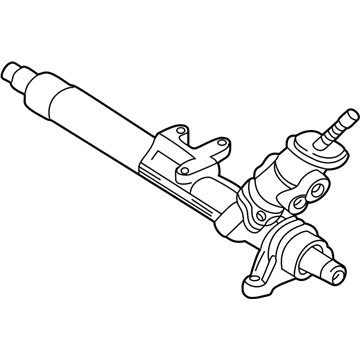
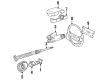
Audi 90 Gear Assembly Part Number: 811-422-065-FX
$960.14 MSRP: $1225.00You Save: $264.86 (22%)Ships in 1-2 Business Days
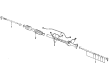
Audi 90 Steering Gear Part Number: 893-422-065-M
$638.14 MSRP: $825.00You Save: $186.86 (23%)Ships in 1-2 Business Days
Audi 90 Gear Assembly Part Number: 893-422-066-X
$950.94 MSRP: $1225.00You Save: $274.06 (23%)Ships in 1-2 Business DaysAudi 90 Gear Assembly Part Number: 8G1-422-065-BX
$973.18 MSRP: $1250.00You Save: $276.82 (23%)Ships in 1-2 Business Days
Audi 90 Gear Assembly Part Number: 8A1-422-065-EX
$2087.75 MSRP: $2500.00You Save: $412.25 (17%)Ships in 1-2 Business Days
Audi 90 Rack and Pinions
Choose original equipment manufacturer Rack and Pinions for great performance and strong durability. They use Audi's official craftsmanship and high-grade materials, and meet strict quality standards. Are you looking for quality Rack and Pinions at a good price? Come to our online store. We carry a wide range of genuine parts for your Audi 90 and the prices are competitive. Each part comes with the manufacturer's warranty. You can install with confidence and get steady results. Over time, you'll save money and avoid hassle. Keep your maintenance simple and protect your vehicle with OEM parts. Get the quality your 90 needs now.
Audi 90 Rack and Pinions Parts and Q&A
- Q: Can Rack and Pinions in the steering gear be repaired, and what steps should be taken if they are excessively worn on Audi 90?A:Repair of the rack and pinions is not possible; if the unit is excessively worn, its action will be weak, leading to increased road shocks transmitted to the Steering Wheel. A new or reconditioned unit should be obtained. For heavy or stiff steering, checking the steering damper for partial seizure may be worthwhile. Begin by applying the handbrake, jacking up the front of the car, and supporting it on axle stands before removing the front wheels. On manual steering models, unscrew and remove the bolt securing the steering damper to the carrier plate, then unscrew and remove the bolts securing the carrier plate to the rack and pinions and pull the carrier plate forwards. If applicable, remove the trim panel from under the facia panel over the steering column, disengage the rubber seal from the bulkhead, and on manual steering models, from the rack and pinions. Unscrew and remove the clamp bolt securing the column flange tube to the rack and pinions pinion, and if necessary, tap the flange from the pinion using a soft metal drift. For models equipped with power steering, place a suitable container beneath the rack and pinions to catch escaping fluid, fit a hose clamp on the power steering flexible hoses, unscrew the union nut and bolt from the supply and return lines, and detach them from the rotary valve housing on the rack and pinions. Next, unscrew the mounting nuts securing the rack and pinions to the bulkhead and side panel, and withdraw it from the engine compartment. Detach the steering damper from the stud on the rack and pinions, holding the stud stationary with an Allen key if necessary. Refitting is a reversal of removal, ensuring to renew all self-locking nuts and tighten all nuts and bolts to the specified torque, with the bolts securing the rack and pinions to the side panel tightened before the bulkhead bolts. Renew the power steering union washers where necessary, and top up and bleed the power steering circuit.
- Q: How should the Rack and Pinions steering gear be adjusted if there is undue slackness resulting in noise or rattles on Audi 90?A:Where there is any unnecessary flack in the steering gear, causing a noise, or rattles, the steering gear must be adjusted with the assistance of an assistant. The assistant is to occupy the driver of the automobile seat and he is expected to turn the Steering Wheel in one direction and anti clockwise rotation in the other direction, of course, with the front wheels in the straight ahead position. Then, loosen the screw at the top of the steering gear until there is enough slackness in it and the rack can be heard moving within the car. Tighten the adjustment screw slowly until movement of the rack can no longer be heard in the interior of the car, and, in the event a locknut exists thereof, tighten it once the adjustment has been made. Last but not least, lock to lock of the steering checking whether it has tight spots.