×
- Hello
- Login or Register
- Quick Links
- Live Chat
- Track Order
- Parts Availability
- RMA
- Help Center
- Contact Us
- Shop for
- Audi Parts

My Garage
My Account
Cart
Genuine Audi 100 Alternator
Generator- Select Vehicle by Model
- Select Vehicle by VIN
Select Vehicle by Model
orMake
Model
Year
Select Vehicle by VIN
For the most accurate results, select vehicle by your VIN (Vehicle Identification Number).
3 Alternators found
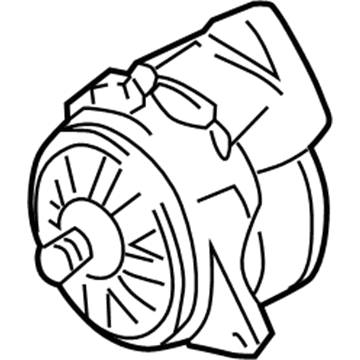
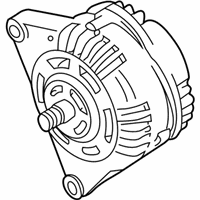
Audi 100 Alternator Part Number: 078-903-015-FX
$365.89 MSRP: $471.00You Save: $105.11 (23%)Ships in 1-2 Business Days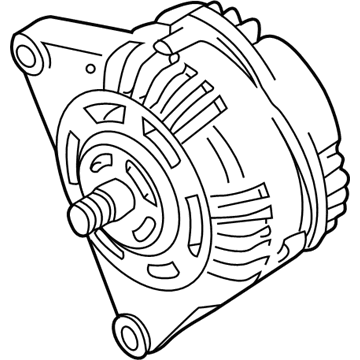
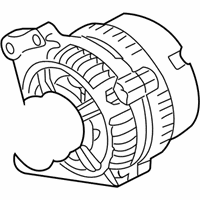
Audi 100 Alternator Part Number: 034-903-017-BX
$515.01 MSRP: $665.00You Save: $149.99 (23%)Ships in 1-2 Business Days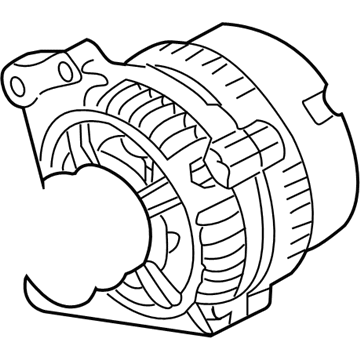
Audi 100 Alternator Part Number: 058-903-018-X
$510.81 MSRP: $657.68You Save: $146.87 (23%)Ships in 1-2 Business Days
Audi 100 Alternator
Choose original equipment manufacturer Alternator for great performance and strong durability. They use Audi's official craftsmanship and high-grade materials, and meet strict quality standards. Are you looking for quality Alternator at a good price? Come to our online store. We carry a wide range of genuine parts for your Audi 100 and the prices are competitive. Each part comes with the manufacturer's warranty. You can install with confidence and get steady results. Over time, you'll save money and avoid hassle. Keep your maintenance simple and protect your vehicle with OEM parts. Get the quality your 100 needs now.
Audi 100 Alternator Parts and Q&A
- Q:How is the alternator removed and refitted on Audi 100?A:The alternator either on the front right-hand or left-hand side of the engine, again depending on the type of engine, is provided with a belt connecting it to a pulley on the front of the crankshaft. Start by using the handbrake, lifting the front of the car and then resting it on axle stands and then removing the engine undershield. Then remove the negative lead of the battery and the auxiliary drivebelt of the alternator pulley. Unplug the charge warning light wiring, depending on the model some have a plastic cover that needs removal. Unscrew the nut, remove the protective cap and unplug the positive cable of the alternator. Unscrew and disconnect the bottom and the top mounting bolts, and raise the alternator out of the bracket; a Torx key might be required to keep the head actually still as to loosen the nuts. To refit, turn the steps of removal back, making sure that the mounting bolts are securely tightened with the help of a Torx key and a spanner to the upper mounting bolt.
- Q:What should you do before starting work regarding the ignition warning light and alternator checks on Audi 100?A:The safety guidelines are also an important warning that one should pay attention to before commencing the work. In case the ignition warning light fails to glow when you turn the ignition on, then initially verify the connections of the alternator wiring. In case they are satisfactory, make sure that warning light bulb is not blown and that the bulbholder is firmly attached to the instrument panel. In case the light but nothing is lighted, examine the continuity of the warning light feed wire between the alternator and the bulbholder. In the event of all things working out, then the alternator might be faulty and needs replacement or be taken to auto-electrician to test and repair. When the ignition warning light goes on during the engine operation, switch off the engine and ensure that the drivebelt is correctly fitted and in place, and the alternator wiring is correct. Check the alternator brushes and slip rings in case they are satisfactory. In case the problem persists, an alternator needs to be replaced or an auto-electrician is needed. When the alternator output may be doubtful regardless of whether or not the warning lamp is operating properly, verify the regulated voltage by hooking a voltmeter across the terminals of the batteries and firing up the engine. Keep on turning up the engine speed till the volt meter reading is steady; it must be about 12 or 13 volts and not over 14 volts. Switch on all the electrical accessories possible, including headlights and the heater blower, and make sure that the alternator is kept at a regulated voltage of about 13 to 14 volts. When the controlled voltage is out of this range, then it could be a sign of worn-out brushes, weak brush springs, a faulty regulator of voltage, a failed diode, a cut phase winding, or worn and damaged slip rings. The slip rings and brushes might be replaced, nevertheless, when the issue is still observed, the alternator needs to be substituted or brought to an auto-electrician.