×
- Hello
- Login or Register
- Quick Links
- Live Chat
- Track Order
- Parts Availability
- RMA
- Help Center
- Contact Us
- Shop for
- Audi Parts

My Garage
My Account
Cart
Genuine Audi TT Quattro Catalytic Converter
Cat. Converter- Select Vehicle by Model
- Select Vehicle by VIN
Select Vehicle by Model
orMake
Model
Year
Select Vehicle by VIN
For the most accurate results, select vehicle by your VIN (Vehicle Identification Number).
11 Catalytic Converters found
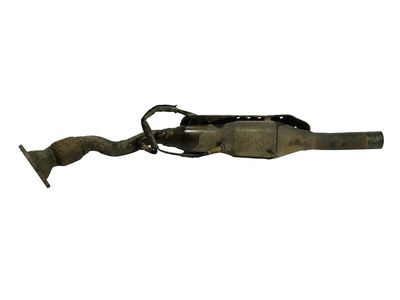
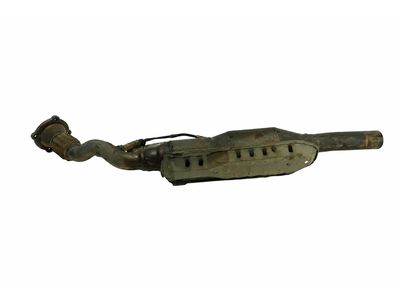
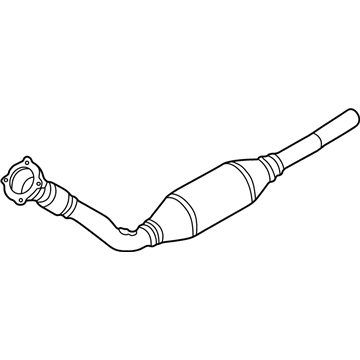
Audi TT Quattro Converter & Pipe Part Number: 8N0-254-501-X
$1926.61 MSRP: $2312.86You Save: $386.25 (17%)Ships in 1-2 Business Days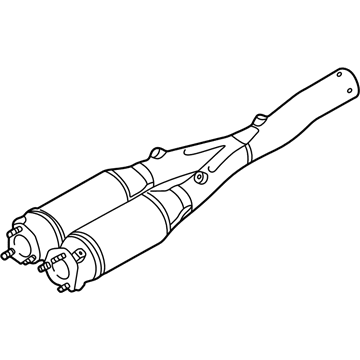
Audi TT Quattro Catalytic Converter Part Number: 1J1-131-701-DX
$1584.31 MSRP: $1884.28You Save: $299.97 (16%)Ships in 1-2 Business Days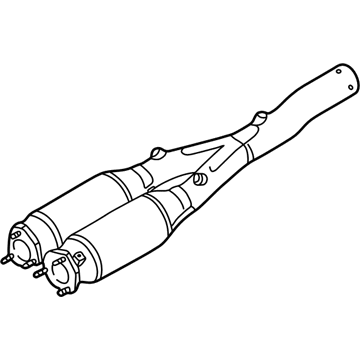
Audi TT Quattro Catalytic Converter Part Number: 8N0-254-400-CX
$1782.62 MSRP: $2140.00You Save: $357.38 (17%)Ships in 1-2 Business Days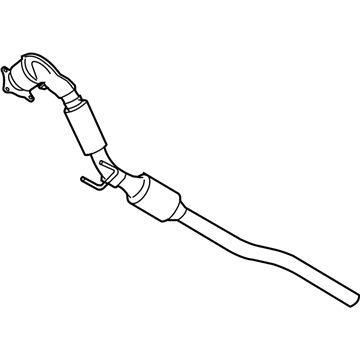
Audi TT Quattro Converter & Pipe Part Number: 8J0-254-501-QX
$2233.63 MSRP: $2681.43You Save: $447.80 (17%)Ships in 1-2 Business Days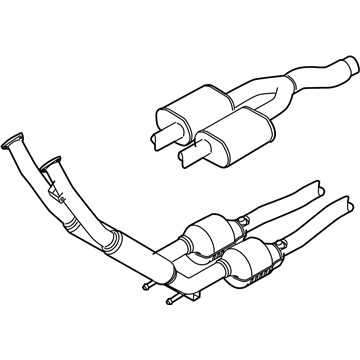
Audi TT Quattro Converter & Pipe Part Number: 8J0-254-500-BX
$2542.25 MSRP: $3034.27You Save: $492.02 (17%)Ships in 1-2 Business Days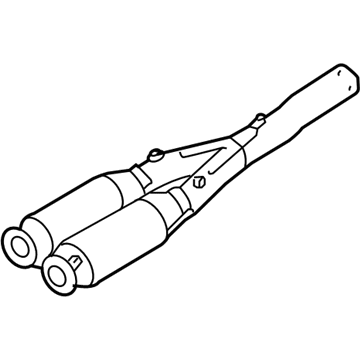
Audi TT Quattro Catalytic Converter Part Number: 1J1-131-701-JX
$1891.33 MSRP: $2252.86You Save: $361.53 (17%)Ships in 1-2 Business Days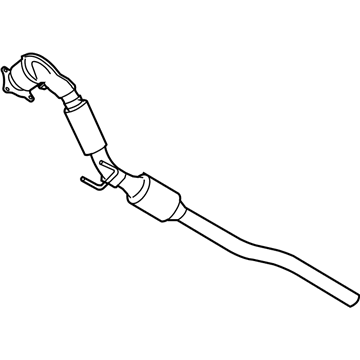
Audi TT Quattro Converter & Pipe Part Number: 8J0-254-501-NX
$2305.44 MSRP: $2749.99You Save: $444.55 (17%)Ships in 1-2 Business Days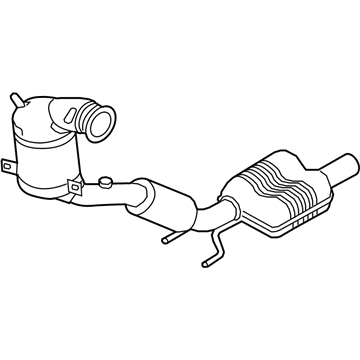
Audi TT Quattro Catalytic Converter Part Number: 8S0-254-500-BX
$2367.32 MSRP: $2824.27You Save: $456.95 (17%)Ships in 1-2 Business Days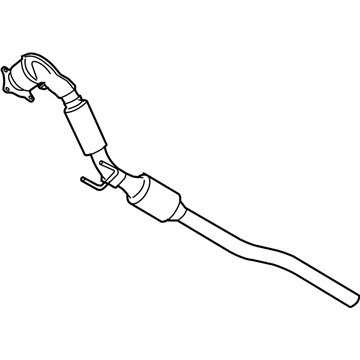
Audi TT Quattro Converter & Pipe Part Number: 8J0-254-502-EX
$2863.55 MSRP: $3419.99You Save: $556.44 (17%)Ships in 1-2 Business DaysAudi TT Quattro Converter & Pipe Part Number: 8J0-254-502-CX
$2863.55 MSRP: $3419.99You Save: $556.44 (17%)Ships in 1-2 Business Days
Audi TT Quattro Catalytic Converter Part Number: 1J0-131-089-EX
$1674.75 MSRP: $1992.86You Save: $318.11 (16%)Ships in 1-2 Business Days
Audi TT Quattro Catalytic Converter
Choose original equipment manufacturer Catalytic Converter for great performance and strong durability. They use Audi's official craftsmanship and high-grade materials, and meet strict quality standards. Are you looking for quality Catalytic Converter at a good price? Come to our online store. We carry a wide range of genuine parts for your Audi TT Quattro and the prices are competitive. Each part comes with the manufacturer's warranty. You can install with confidence and get steady results. Over time, you'll save money and avoid hassle. Keep your maintenance simple and protect your vehicle with OEM parts. Get the quality your TT Quattro needs now.
Audi TT Quattro Catalytic Converter Parts and Q&A
- Q:What is the function and importance of the Catalytic Converter (three-way) on Audi TT Quattro?A:The carbon monoxide, unburned hydrocarbons, and nitrogen oxides that are produced from the operation of gasoline vehicle engines, including the catalyst-equipped engines, must be treated for their removal prior to their discharge to the atmosphere. The operation is only correct when the air/fuel ratio is held in a narrow range, the feedback to the controller for mixture control comes from Oxygen Sensors. Although the catalytic converter does not need to be maintained on a routine basis, damage may occur to the component when malfunctions which will raise its temperature to above its normal operating range occur. These malfunctions include incorrect ignition timing, air/fuel mixture problems, engine misfire, prolonged engine idling, and extended high engine loads. A broken converter could result in less power, stalling, rattling in the exhaust system, and overemissions. This type of vehicle uses a second heated oxygen sensor to monitor the operation of the catalyst, and when the converter does not oxidize used combustion gases properly, the Engine Control Module stores a Diagnostic Trouble Code. When there is an exhaust leak in the system, such as a leak between the cylinder head and the catalytic converter, it can cause running problems, false DTCs or converter failure. In order to check the function of the catalytic converter, an infrared exhaust gas analyzer must be used to check the air/fuel mixture adjustment at the exhaust system test port upstream of the catalytic converter and again at the tailpipe. A properly functioning catalytic converter will have a lower tailpipe reading than the test port reading. If the readings are the same or if the tailpipe reading is slightly lower than the test port reading, the catalytic converter is faulty.
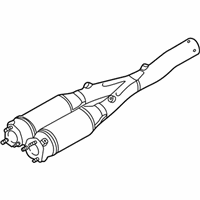
Related Audi TT Quattro Parts
 Audi TT Quattro Catalytic Converter Gasket
 Audi TT Quattro Exhaust Clamp
 Audi TT Quattro Exhaust Flange Gasket
 Audi TT Quattro Exhaust Hanger
 Audi TT Quattro Exhaust Heat Shield
 Audi TT Quattro Exhaust Manifold Clamp
 Audi TT Quattro Exhaust Pipe
 Audi TT Quattro Exhaust Resonator
 Audi TT Quattro Exhaust Tip
 Audi TT Quattro Muffler
 Audi TT Quattro Muffler Strap
 Audi TT Quattro Tail Pipe
Browse by Year
2023 Catalytic Converter 2022 Catalytic Converter 2021 Catalytic Converter 2020 Catalytic Converter 2019 Catalytic Converter 2018 Catalytic Converter 2017 Catalytic Converter 2016 Catalytic Converter 2015 Catalytic Converter 2014 Catalytic Converter 2013 Catalytic Converter 2012 Catalytic Converter 2011 Catalytic Converter 2010 Catalytic Converter 2009 Catalytic Converter
2008 Catalytic Converter 2006 Catalytic Converter
2005 Catalytic Converter
2004 Catalytic Converter
2003 Catalytic Converter
2002 Catalytic Converter
2001 Catalytic Converter
2000 Catalytic Converter