×
- Hello
- Login or Register
- Quick Links
- Live Chat
- Track Order
- Parts Availability
- RMA
- Help Center
- Contact Us
- Shop for
- Audi Parts

My Garage
My Account
Cart
Genuine Audi A3 Brake Booster
Brake Power Booster- Select Vehicle by Model
- Select Vehicle by VIN
Select Vehicle by Model
orMake
Model
Year
Select Vehicle by VIN
For the most accurate results, select vehicle by your VIN (Vehicle Identification Number).
6 Brake Boosters found
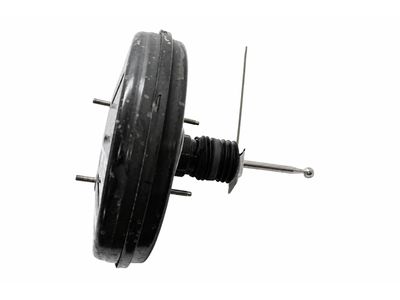
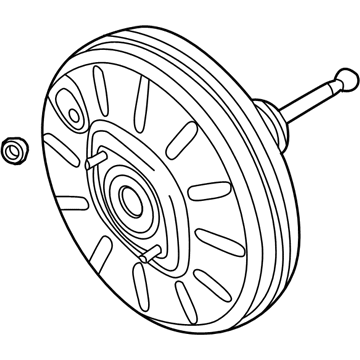
Audi A3 Booster Assembly Part Number: 5Q1-614-106-Q
$236.80 MSRP: $331.65You Save: $94.85 (29%)Ships in 1-2 Business Days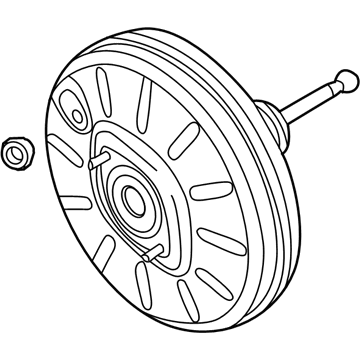
Audi A3 Booster Assembly Part Number: 5Q1-614-106-N-REP
$217.76 MSRP: $304.99You Save: $87.23 (29%)Ships in 1-2 Business Days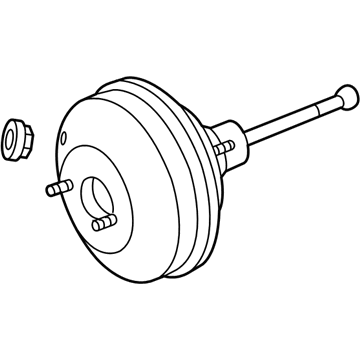
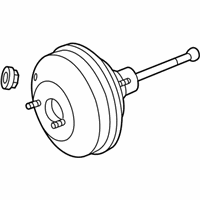
Audi A3 Booster Assembly Part Number: 1K1-614-106-A
$236.80 MSRP: $331.65You Save: $94.85 (29%)Ships in 1-2 Business DaysAudi A3 Booster Assembly Part Number: 8V1-612-107-A
$294.51 MSRP: $412.49You Save: $117.98 (29%)Ships in 1-2 Business DaysAudi A3 Booster Assembly Part Number: 1K1-614-106-AA
$330.21 MSRP: $462.49You Save: $132.28 (29%)Ships in 1-2 Business Days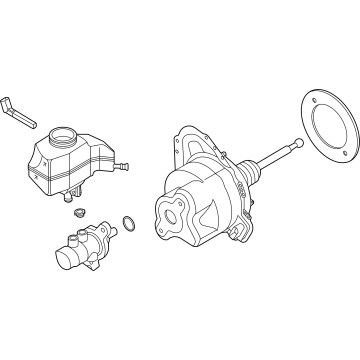
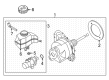
Audi A3 Master Cylinder Assembly Part Number: 5WB-614-105-AK
$565.65 MSRP: $792.23You Save: $226.58 (29%)Ships in 1-2 Business Days
Audi A3 Brake Booster
Audi A3 Brake Booster relieves the effort required to make confident stops by utilizing engine-produced vacuum or hydraulic pressure to amplify the force you apply with the pedal. The Brake Booster is fitted between the brake pedal and master cylinder, and the Brake Booster on most Audi versions is based on a sealed shell containing a diaphragm and power piston. When an engine is operating, it fills both sides of the shell with manifold vacuum and maintains a balance in the system until you press the pedal. The effect of that motion is to open an internal valve, where the atmospheric air rushes into the rear chamber and the difference in pressure causes the piston to move forward, which forces the master cylinder with much more effect than could be produced by a leg alone and gives the driver a smooth, responsive feel. Other previous generations have transitioned to a hydraulic assist unit, where high pressure is borrowed from the steering pump or an electric motor, and this is applied where turbo engines are unable to provide constant vacuum. Although both designs aim to achieve the same goal, the vacuum type is easier and lighter in weight compared to the hydraulic design, which provides the same boost even at high altitudes or under heavy throttle when there is low vacuum. No matter which type it is, a small reserve is stored in each Audi Brake Booster, and when the engine stalls, Audi A3 driver will receive only two or so assisted presses before the pedal effort will skyrocket. That protection is applied to keep the standards of Audi safety, and reflective engineering makes sure that all the Brake Boosters stay reliable in everyday use.
Choose original equipment manufacturer Brake Booster for great performance and strong durability. They use Audi's official craftsmanship and high-grade materials, and meet strict quality standards. Are you looking for quality Brake Booster at a good price? Come to our online store. We carry a wide range of genuine parts for your Audi A3 and the prices are competitive. Each part comes with the manufacturer's warranty. You can install with confidence and get steady results. Over time, you'll save money and avoid hassle. Keep your maintenance simple and protect your vehicle with OEM parts. Get the quality your A3 needs now.
Audi A3 Brake Booster Parts and Q&A
- Q:How to test and replace the Brake Booster servo unit on Audi A3?A:In order to test the brake booster, press the footbrake a few times to deplete the vacuum, then upon starting the engine, press the pedal to the floor; one should have a feel of the brake pedal giving in as the vacuum fills in supply. Let the engine run for a minimum of two minutes and then turn it off. When the brake pedal does not get hard when stepped on the first time but becomes stiffer every time the brake pedal is used, then the brake booster is working well. In case it does not work, examine the brake booster non-return valve and, in diesel models, the vacuum pump. If the brake booster does not work satisfactorily, then it should be replaced because it cannot be repaired. The brake booster may be removed by first disassembling the master cylinder, followed, where necessary, by the heat shield and the vacuum hose of the sealing grommet. Uncouple the wiring to the brake booster vacuum sensor (where fitted), remove the retaining circlip, and dislodge the sensor. With LHD models and a manual transmission, the gearchange cables are to be disconnected, and the gearchange support bracket is to be unbolted and tied up. Eliminate the lower side of the driver facia panel and the lower side of the dash panel. On models produced prior to the end of 2005, the brake light switch is found to be located on the pedal bracket and is to be removed. When installed, loosen the retaining screws and unscrew the connection plate between the brake and clutch pedals, and also take away the air duct and cover so that the brake booster mounting nuts can be accessed. Attach a special tool or a suitable alternative to release the brake pedal from the brake booster pushrod off the ball with a special tool in place of the plastic lugs, which are tough. Loosen the nuts holding the brake booster to the bulkhead and then push the unit out of place, retrieving the gasket where used. Clearing of the inlet manifold may be required on some of the RHO models. To refit, inspect the vacuum hose sealing grommet to see if it is damaged and fit a replacement gasket to the rear of the brake booster and re-fit it in the engine compartment. Make sure that the brake booster pushrod is properly seated in the brake pedal, press the pedal on the pushrod ball, and reassemble and tighten the mounting nuts to the required torque. Install the connecting plate, air duct, and cover back in place where necessary, and on models built prior to late 2005, replace the brake light switch again. Refit the facia trim panels, and on LHO models with manual transmission, refit the gearchange cables and support cable. Ease the vacuum hose firmly back in the correct position, ensuring that the sealing grommet has not been shifted around, and reattach the heat shield and, where necessary, the vacuum sensor and wiring. Lastly, install the master cylinder again, and on RHO models, install the inlet manifold again, should it be missing. When it is completed, start the engine and inspect for air leaks at the vacuum hose-to-brake booster connection and the functioning of the braking system.
Related Audi A3 Parts
 Audi A3 Brake Pads
 Audi A3 Brake Booster Vacuum Hose
 Audi A3 Brake Master Cylinder
 Audi A3 ABS Control Module
 Audi A3 ABS Pump And Motor Assembly
 Audi A3 Brake Caliper Bolt
 Audi A3 Brake Fluid Pump
 Audi A3 Brake Line
 Audi A3 Brake Master Cylinder Repair Kit
 Audi A3 Brake Rotor
 Audi A3 Hydraulic Hose
 Audi A3 Parking Brake Actuator
Browse by Year
2024 Brake Booster 2023 Brake Booster 2022 Brake Booster 2020 Brake Booster 2019 Brake Booster 2018 Brake Booster 2017 Brake Booster 2016 Brake Booster 2015 Brake Booster 2013 Brake Booster 2012 Brake Booster 2011 Brake Booster 2010 Brake Booster 2009 Brake Booster 2008 Brake Booster 2007 Brake Booster 2006 Brake Booster