×
- Hello
- Login or Register
- Quick Links
- Live Chat
- Track Order
- Parts Availability
- RMA
- Help Center
- Contact Us
- Shop for
- Audi Parts

My Garage
My Account
Cart
Genuine Audi 80 Alloy Wheels
Alloy Factory Wheels- Select Vehicle by Model
- Select Vehicle by VIN
Select Vehicle by Model
orMake
Model
Year
Select Vehicle by VIN
For the most accurate results, select vehicle by your VIN (Vehicle Identification Number).
7 Alloy Wheels found
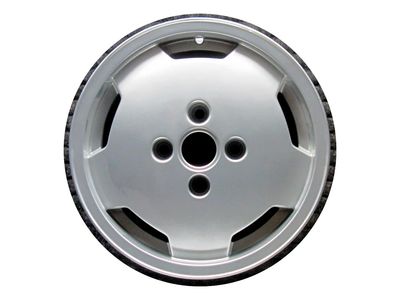
Audi 80 Wheel, Alloy Part Number: 893-601-025-A-Z7P
$213.28 MSRP: $298.72You Save: $85.44 (29%)Ships in 1-2 Business Days
Audi 80 Wheel, Steel Part Number: 431-601-025-R
$78.54 MSRP: $110.00You Save: $31.46 (29%)Ships in 1-2 Business Days
Audi 80 Compact Spare Part Number: 893-601-025-B-03C
$107.10 MSRP: $150.00You Save: $42.90 (29%)Ships in 1-2 Business DaysAudi 80 Wheel, Alloy Part Number: 893-601-025-A-0A9
$119.67 MSRP: $167.60You Save: $47.93 (29%)Ships in 1-2 Business DaysAudi 80 Wheel, Alloy Part Number: 443-601-025-C-0A9
$119.67 MSRP: $167.60You Save: $47.93 (29%)Ships in 1-2 Business DaysAudi 80 Wheel, Alloy Part Number: 853-601-025-A-0A9
$122.09 MSRP: $171.00You Save: $48.91 (29%)Ships in 1-2 Business Days
Audi 80 Wheel, Steel Part Number: 893-601-025-H-Z7P
$59.10 MSRP: $81.40You Save: $22.30 (28%)Ships in 1-2 Business Days
Audi 80 Alloy Wheels
Choose original equipment manufacturer Alloy Wheels for great performance and strong durability. They use Audi's official craftsmanship and high-grade materials, and meet strict quality standards. Are you looking for quality Alloy Wheels at a good price? Come to our online store. We carry a wide range of genuine parts for your Audi 80 and the prices are competitive. Each part comes with the manufacturer's warranty. You can install with confidence and get steady results. Over time, you'll save money and avoid hassle. Keep your maintenance simple and protect your vehicle with OEM parts. Get the quality your 80 needs now.
Audi 80 Alloy Wheels Parts and Q&A
- Q:What are the key considerations for maintaining alloy wheels to prevent excessive wear and damage on Audi 80?A:The problem with wheels and tyres is not so serious as long as they are monitored in terms of excessive wear and damage. Checks on tyre pressures should have been made regular, and it is necessary to ensure that the measurements are taken when temperatures are low to prevent false high measurements due to heat expansion. Underinflation may cause overheating and excessive wear whereas overinflation may cause excessive wear in the centre of the tread and reduced adhesion. Tyres are to be examined on whether they have cuts or bulges especially along the sidewalls and any objects they may have inside them should be removed as soon as possible to avoid deflation. Tyre puncture hogs should be repaired by placing the puncture on the tyre and replacing the punctured area. It is necessary to periodically clean the wheels and check them regarding the presence of rust or other damage since light alloy and steel wheels are easily damaged. The balance of individual wheels and tyre assemblies is also important to ensure that the tyres and the suspension system are not overused and the imbalance is usually detected through vibrations. Balancing of the wheels could be done when the vehicle is stationary or when it is not and it is necessary to mark the correlation between the wheel and the hub in case it is done when the vehicle is stationary. Driving style also causes a great influence on the tyre wear, sharp braking and fast cornering cause an accelerated degradation. Misalignment of front tyres can result in uneven wear, thus it should be fixed as per the manufacturer requirements. There are legal constraints on the interchangeability of tyres on a vehicle and especially on the same axle and it is better to check the local laws with regards to the compliance with the standards of fitting and using tyres.


